Birmingham, the Industrial Revolution and the Lunar Society
Matthew Boulton, James Watt and a group of friends who met by the full moon helped Birmingham build the modern world.
In the 18th century, Birmingham was one of the places where the modern world was made. Its workshops, inventors and entrepreneurs helped drive the Industrial Revolution, and a small group of friends who met by the light of the full moon changed science, industry and society.
A town of makers
By the early 18th century, Birmingham was already known for its metalworking trades. Its workshops made buckles, buttons, guns, nails and a huge range of small metal goods, known at the time as toys. Unlike many towns, Birmingham had no restrictive guilds, so newcomers and nonconformists could set up in business freely.
Matthew Boulton and the Soho Manufactory
Matthew Boulton, born in Birmingham in 1728, built the Soho Manufactory in Handsworth in the 1760s. It was one of the largest factories in the world, making buttons, buckles, silverware and other goods, and visitors came from across Europe to see it.
Boulton also campaigned for Birmingham's Assay Office, which opened in 1773 and still hallmarks precious metals today.
James Watt and the steam engine
In 1774, the Scottish engineer James Watt moved to Birmingham to work with Boulton. Together they developed and sold Watt's improved steam engine, which was far more efficient than earlier designs. Boulton and Watt engines powered mills, mines and factories across Britain and beyond.
In 1796, the firm opened the Soho Foundry in Smethwick to build engines. The Smethwick Engine, one of their engines, can still be seen working at Thinktank.
The Lunar Society
Boulton was at the centre of the Lunar Society, a group of scientists, inventors and thinkers who met in Birmingham from the 1760s. They met on the Monday nearest the full moon, so that they had light to travel home by. Members called themselves Lunaticks.
The society included James Watt, the physician Erasmus Darwin, the potter Josiah Wedgwood, the chemist Joseph Priestley, who is credited with discovering oxygen, and many others. They discussed everything from chemistry and electricity to canals and education.
The Priestley Riots
In 1791, rioters attacked the homes and chapels of dissenters in Birmingham, including Joseph Priestley's house and laboratory, after a dinner held to celebrate the French Revolution. Priestley later left Britain for America.
Canals
Industry needed transport. The Birmingham Canal, opened in 1769, cut the cost of coal in the town, and a network of canals soon connected Birmingham to the rest of the country.
Where to see this history
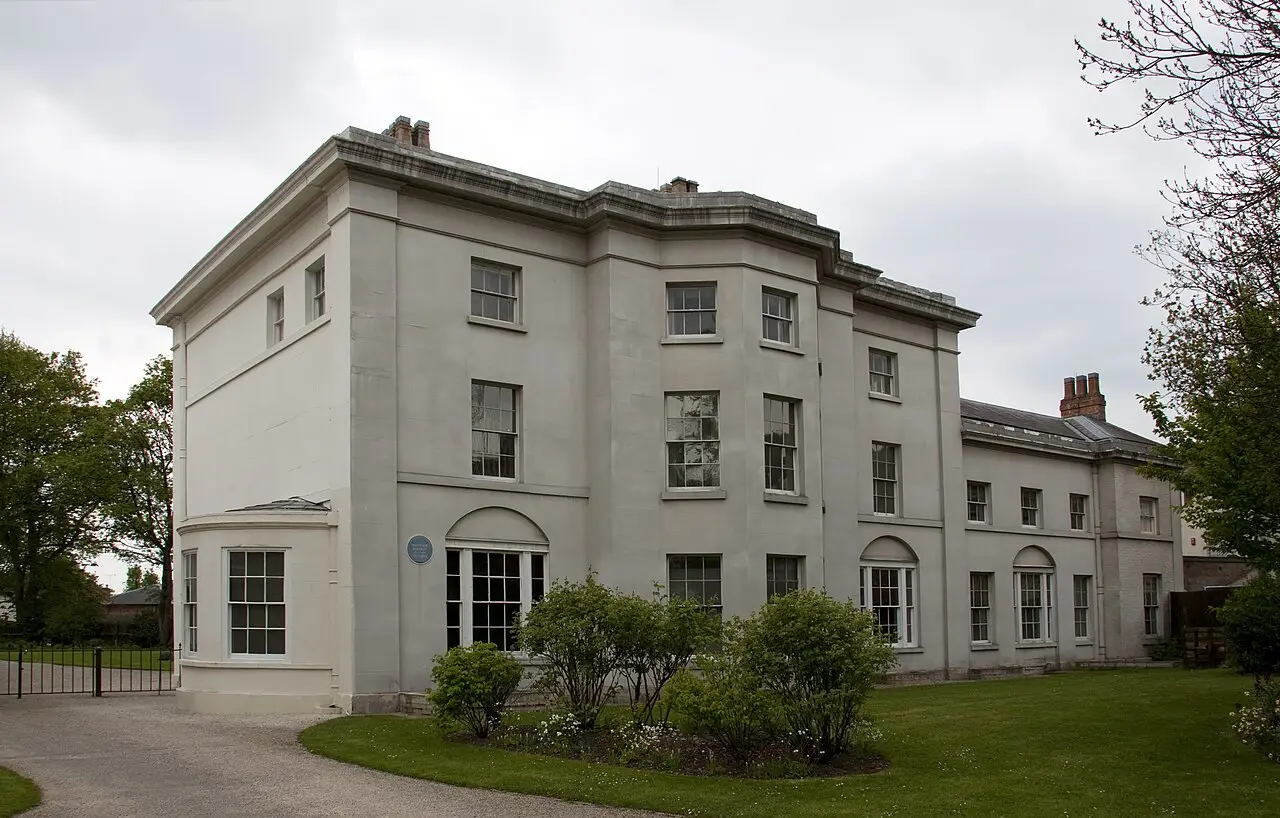
Soho House, Boulton's home in Handsworth, is now a museum where the Lunar Society met. The Library of Birmingham holds the archives of Boulton and Watt. A statue of Boulton, Watt and William Murdoch, known as the Golden Boys, stands on Broad Street.
Birmingham's motto, Forward, sums up the spirit of the town that helped build the modern world.