Birmingham history in the 1900s
Two world wars, the rise of the car, the Bull Ring and the ring road: how the twentieth century transformed Birmingham.
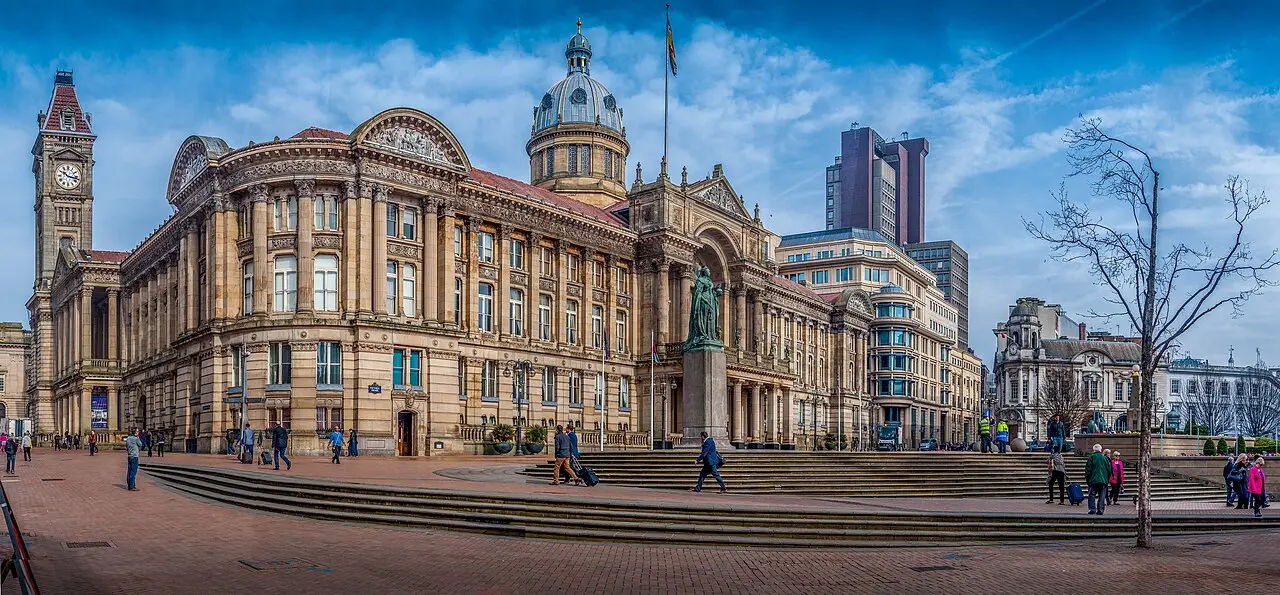
The twentieth century transformed Birmingham. It began the century as a proud Victorian industrial town that had only recently become a city, and ended it as a modern European city rebuilding itself around culture, conventions and shopping. In between came two world wars, the rise of the car industry, huge new housing estates and a bold, controversial rebuilding of the city centre.
A new university and a bigger city
In 1900, the University of Birmingham received its royal charter, with Joseph Chamberlain as its first chancellor. Its red-brick campus at Edgbaston and its clock tower, known as Old Joe, became symbols of the city's ambition.
In 1911, the Greater Birmingham Act brought Aston, Erdington, Handsworth, Kings Norton, Northfield and Yardley into the city, more than tripling its area and making it one of the largest cities in Britain.
Industry and the motor car
In 1905, Herbert Austin began building cars at Longbridge, and the factory grew into one of the largest car plants in the world. Birmingham's factories made bicycles, motorcycles, guns, tyres and countless other goods, and the city became known as the city of a thousand trades. Cadbury's Bournville works launched Dairy Milk in 1905.
Two world wars
During the First World War, thousands of Birmingham men joined the city's Pals battalions, and many never returned. The Hall of Memory in Centenary Square, opened in 1925, remembers them.
In the Second World War, Birmingham's factories made aircraft, weapons and vehicles, and Castle Bromwich built thousands of Spitfires. The city was one of the most heavily bombed places in Britain outside London, with more than 2,000 people killed in air raids.
Rebuilding the city
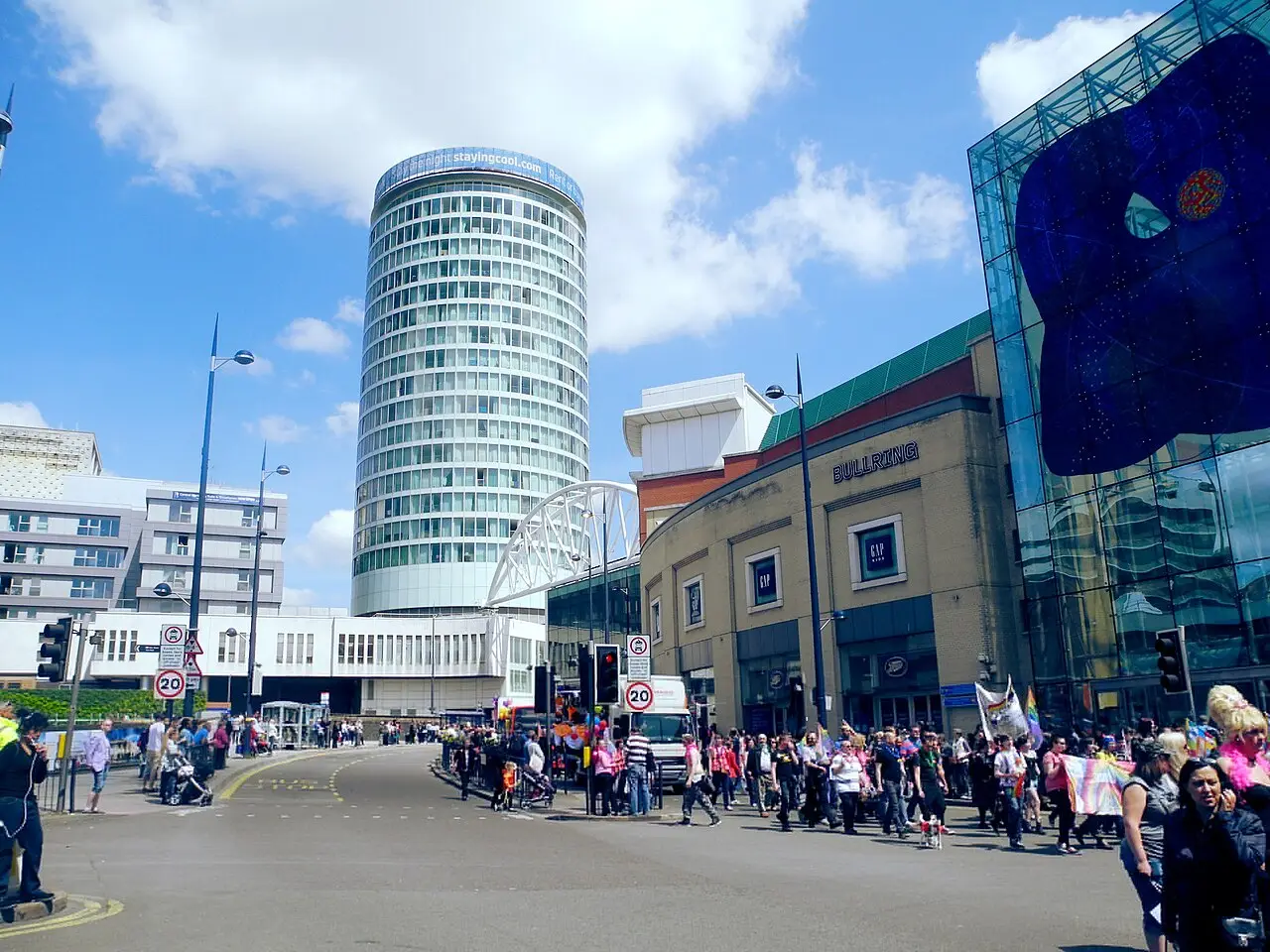
After the war, Birmingham set out to rebuild. The city engineer Herbert Manzoni oversaw the construction of the inner ring road and the demolition of many old streets. The Bull Ring shopping centre opened in 1964, and the Rotunda in 1965. Tens of thousands of new council homes were built, including tower blocks and large estates on the edge of the city.
A changing population
From the 1950s, people arrived from the Caribbean, India, Pakistan, Bangladesh and Ireland, bringing new cultures, food and music. Their contribution reshaped the city.
Hard times
The 1970s and 1980s brought difficult years. In 1974, the Birmingham pub bombings killed 21 people. The six men wrongly convicted of the attack were freed in 1991 after one of Britain's most notorious miscarriages of justice. The decline of manufacturing brought high unemployment to many areas.
Renaissance
From the late 1980s, the city began to reinvent itself. The International Convention Centre and Symphony Hall opened in 1991, followed by Brindleyplace and the National Indoor Arena. The canals were cleaned up and became a place to live and relax. In 1998, Birmingham hosted the G8 summit of world leaders.
By 2000, the city that had built so much of Britain's industry was ready for a new century, with the new Bullring already on the drawing board.