
Crew-13 makes the fastest trip yet to the space station
The Dragon spacecraft Grace docked less than eight hours after launch.
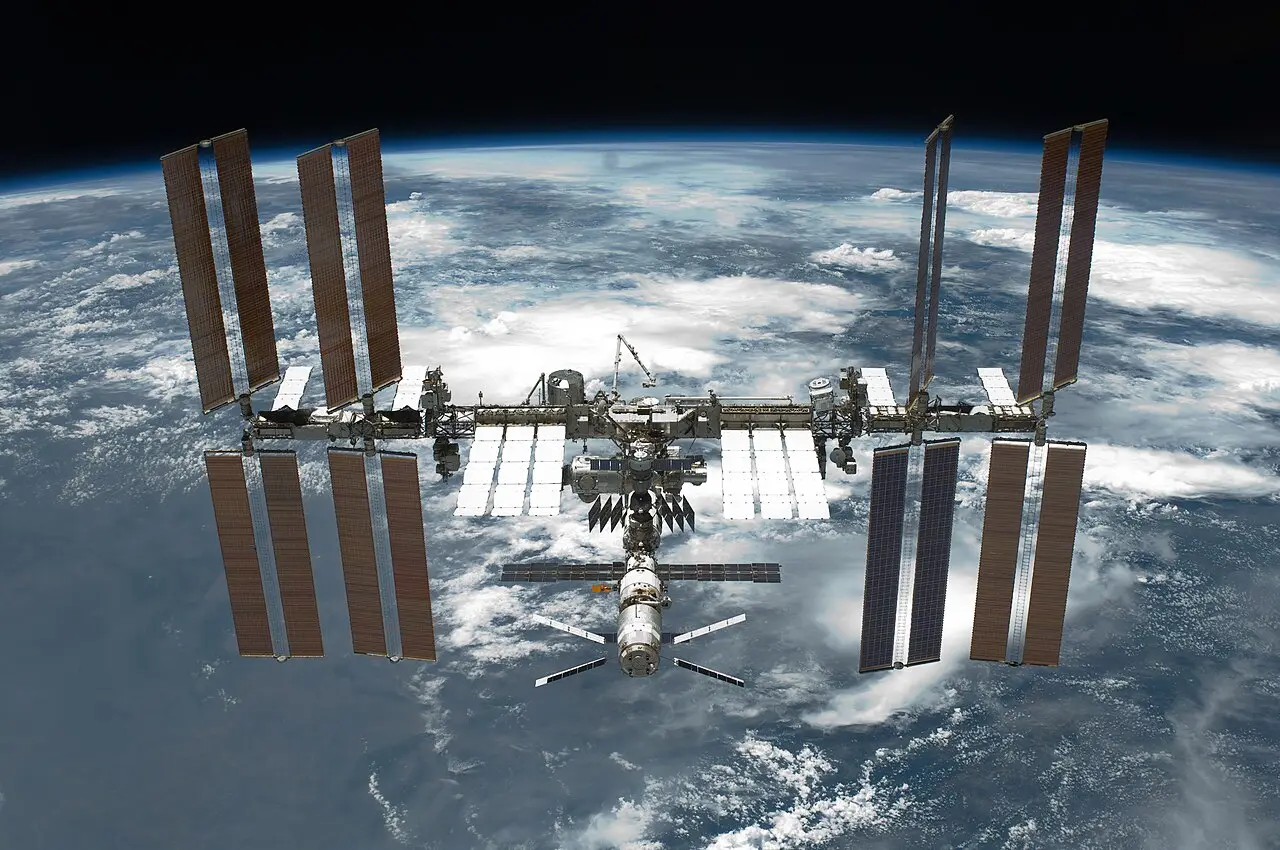
Four astronauts have arrived at the International Space Station after the fastest launch-to-docking by an American spacecraft in the station's history.
NASA's SpaceX Crew-13 mission lifted off on a Falcon 9 rocket from Space Launch Complex 40 at Cape Canaveral Space Force Station in Florida at 11.10am Eastern time on Thursday 1 October, which was 4.10pm in the UK. The Crew Dragon spacecraft, named Grace, docked with the station about seven hours and 50 minutes later.
The crew
The mission is commanded by NASA astronaut Jessica Watkins, a geologist making her second spaceflight after flying on Crew-4 in 2022. The pilot is NASA astronaut Luke Delaney, a former naval aviator on his first trip to space.
They are joined by two mission specialists, both also flying for the first time. Joshua Kutryk, a Canadian Space Agency astronaut and former fighter pilot, is the first Canadian to be sent to orbit as part of NASA's Commercial Crew Program. Sergey Teteryatnikov is a Russian cosmonaut from Roscosmos and a former submariner.
A delayed start
The mission had been due to launch on 12 September, but the attempt was called off because of a leak in an oxidiser tank. Delaney joked that "the numeral significance was not lost on us", a reference to both the mission number and Apollo 13, the 1970 Moon mission that was famously aborted after an oxygen tank exploded.
What they will do
The crew will spend around six months on the station as part of Expedition 75, returning to Earth around February or March next year. Their work will include producing human tissues from stem cells for research into personalised medicine, testing systems for growing crops automatically in space and continuing health studies into how blood flow changes in weightlessness.
NASA's Administrator, Jared Isaacman, said: "Crew-13 is another demonstration of America's unmatched capability in human spaceflight."
Handing over
After a handover period, the Crew-12 astronauts, Jessica Meir, Jack Hathaway, Sophie Adenot of the European Space Agency and the cosmonaut Andrey Fedyaev, will return to Earth.
Why fast trips matter
Crew Dragon flights to the station have typically taken around a day, as the spacecraft gradually catches up with the station in orbit. A faster journey is more comfortable for the crew, who spend less time in the cramped capsule, and it is useful for delivering time-sensitive experiments. It depends on launching at exactly the right moment and carrying out a precise series of engine burns.
The space station's future
The International Space Station has been continuously occupied since November 2000. It is a partnership between the space agencies of the United States, Russia, Europe, Japan and Canada. NASA plans to retire it around 2030, when it will be steered into the Pacific Ocean, with commercial space stations expected to take its place.
Britain in space
The UK is a member of the European Space Agency, which is a partner in the station, and British scientists have been involved in many experiments flown there. The UK Space Agency has supported plans for more British astronauts to fly, including through commercial missions.
See the station
The space station can often be seen from Birmingham with the naked eye, crossing the sky as a bright, steady point of light shortly after sunset or before sunrise. NASA's Spot the Station website lists the times it will pass overhead.
More in Science
All

Latest news
Featured posts
-
Things to do
Top 10 places to visit in Birmingham
-
Food and drink
The 12 most popular food spots in Birmingham
-
Things to do
The best laser tag locations in Birmingham