
Roman space telescope performing almost 30% better than expected
NASA engineers say the new observatory's main camera is producing sharper images than its designers predicted.
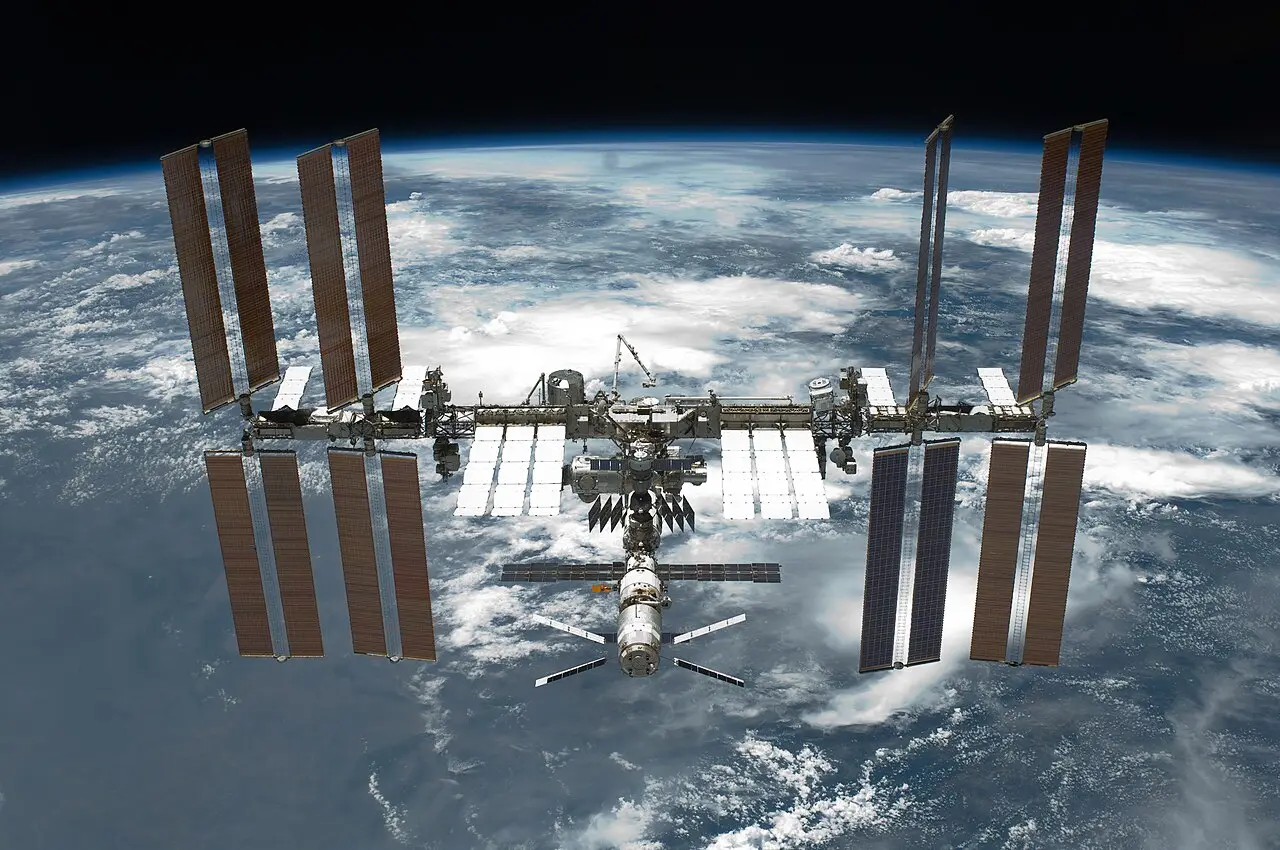
NASA's Nancy Grace Roman Space Telescope, launched at the end of August, is performing nearly 30% better than its designers expected, engineers say.
The telescope is designed to study dark matter, dark energy and other mysteries of the universe through sweeping surveys of the sky, and its main camera, the Wide Field Instrument, is central to almost all of that work.
Testing the camera
After the instrument was switched on in September, engineers worked through a series of checks. They tested its 18 detectors, each about the size of a sticky note, along with a rotating wheel of filters that lets chosen wavelengths of light through. They used built-in coloured lights to calibrate the detectors, moved the optics from their deliberately unfocused launch position into sharp focus, and checked the systems that keep everything at the right temperature.
"Calibrating an instrument is like tuning a piano or guitar before a concert," said Maxime Rizzo, a systems engineer at NASA Goddard in Maryland.
A tiny nudge
The telescope's mirrors were already aligned with remarkable accuracy, thanks to testing on the ground before launch, so only very small corrections were needed. "We moved the secondary mirror by about one-sixteenth of the diameter of a human hair," said Alden Jurling, a senior optical engineer.
Engineers first sharpened the focus of the Coronagraph Instrument, which is designed to block the glare of bright stars so faint objects near them, such as planets, can be seen. Its focus problem turned out to be less serious than expected.
Sharper than planned
The requirement before launch was an optical error of about 90 nanometres, a measure of how far light strays from a perfect focus. That is roughly a thousand times thinner than a human hair. After the adjustments, engineers measured an error of just 63 nanometres.
"All of the images from Roman's cosmic surveys will be even sharper than we expected," Mr Jurling said. "It's a great outcome from years of careful modelling, precision metrology and testing."
Dave Hickey, another systems engineer, said: "Many of the mission's primary goals, like studying dark matter and dark energy, wouldn't be possible without it, so it's both exciting and a huge relief to see that it's working well."
What Roman will do
Roman has a field of view about 100 times larger than the Hubble Space Telescope's, with similar sharpness, so it can map huge areas of the sky quickly. Scientists expect it to find thousands of planets around other stars and to measure how the universe's expansion has changed over time, which could help explain dark energy.
It is named after Nancy Grace Roman, NASA's first chief of astronomy, who is often called the "mother of Hubble" for her work making the Hubble telescope possible. Routine science observations are expected to begin once commissioning is complete.
More in Science
All

Latest news
Featured posts
-
Things to do
Top 10 places to visit in Birmingham
-
Food and drink
The 12 most popular food spots in Birmingham
-
Things to do
The best laser tag locations in Birmingham