
James Webb Space Telescope launched
The largest space telescope ever built lifts off from French Guiana.
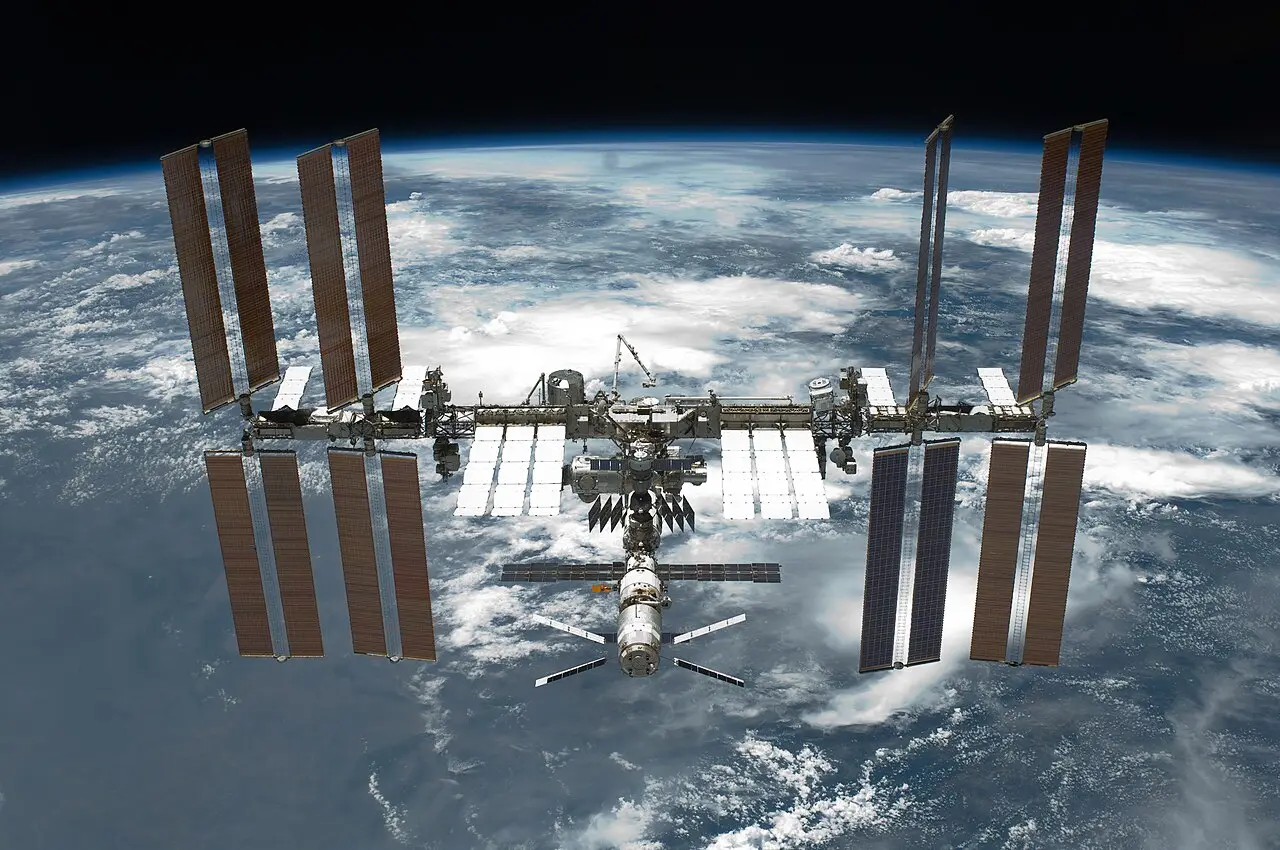
The James Webb Space Telescope, the largest and most powerful space telescope ever built, has been launched from French Guiana.
The telescope lifted off on an Ariane 5 rocket from Europe's spaceport at Kourou on 25 December, after years of delays.
A successor to Hubble
Webb is seen as the successor to the Hubble Space Telescope, launched in 1990. It has a mirror 6.5 metres across, made of 18 gold-coated segments, which gives it far greater light-gathering power than Hubble.
Unlike Hubble, which mainly sees visible light, Webb will observe in infrared. That will allow it to see through clouds of dust and to detect light from the most distant galaxies, which has been stretched into infrared as the universe has expanded.
A complex journey
The telescope is too big to fit inside a rocket fully assembled, so it has been folded up. Over the next two weeks, it will unfold its mirror and a sunshield the size of a tennis court, in a sequence involving hundreds of moving parts, each of which must work perfectly.
Webb will travel to a point in space about 1.5 million kilometres from Earth, known as L2, four times farther away than the Moon. It will take about six months to set up before it begins scientific observations.
What will it study?
Scientists hope Webb will see the first stars and galaxies that formed after the Big Bang, more than 13.5 billion years ago. It will also study the atmospheres of planets orbiting other stars, looking for signs of water and other chemicals that could indicate conditions suitable for life.
An international project
The telescope is a partnership between NASA, the European Space Agency and the Canadian Space Agency. It has cost about $10 billion and has taken more than 25 years to develop.
British scientists and engineers led the European consortium that built MIRI, one of Webb's four main instruments, with work carried out in Edinburgh and at the Rutherford Appleton Laboratory in Oxfordshire.
A nervous wait
Scientists described the launch as flawless, but the most difficult stages are still to come. Unlike Hubble, Webb will be too far away to be repaired by astronauts.
If all goes well, the first images are expected next summer.
More in Science
All
Latest news
Featured posts
-
Things to do
Top 10 places to visit in Birmingham
-
Food and drink
The 12 most popular food spots in Birmingham
-
Things to do
The best laser tag locations in Birmingham