
Gordon Brown becomes Prime Minister
Tony Blair leaves Downing Street after ten years.
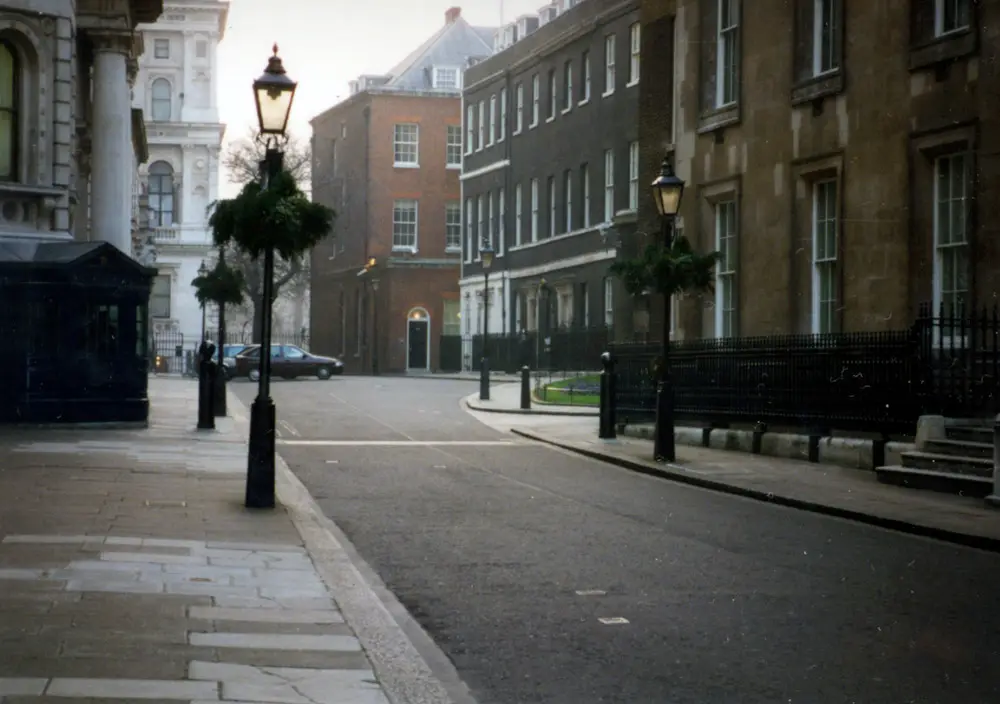
Gordon Brown has become Prime Minister, taking over from Tony Blair after ten years as Chancellor of the Exchequer.
Brown was asked by the Queen to form a government on 27 June, shortly after Blair tendered his resignation at Buckingham Palace.
A change of leader
Brown was elected unopposed as leader of the Labour Party earlier this month, after no other candidate gained enough nominations. He had long been seen as Blair's natural successor.
Speaking outside 10 Downing Street, Brown promised change and said he would try his utmost to meet the concerns of the British people. He referred to his school motto, "I will try my utmost".
Blair's departure
Blair, who has been Prime Minister since 1997, left Downing Street with his family and headed to his constituency in Sedgefield. He has announced that he is standing down as an MP and will become a Middle East peace envoy.
Blair won three general elections, the first Labour leader to do so. His time in office included the Good Friday Agreement in Northern Ireland, investment in public services and the controversial decision to go to war in Iraq.
The new cabinet
Brown is expected to announce his cabinet in the coming hours. Alistair Darling is tipped to become Chancellor, and there are reports that Brown wants to include people from outside the Labour Party in his government.
Who is Gordon Brown?
Brown, 56, was born in Glasgow and grew up in Kirkcaldy, Fife, the son of a Church of Scotland minister. He studied at the University of Edinburgh, where he earned a PhD in history.
As Chancellor, he gave the Bank of England independence to set interest rates, kept Britain out of the euro and presided over a long period of economic growth.
Challenges
Brown faces a number of challenges, including the continuing conflicts in Iraq and Afghanistan, pressure on public services and the need to win back voters before the next general election.
The Conservative leader, David Cameron, has said Brown has no mandate from the public and should call an election.
Brown has promised a government of all the talents and a new style of politics.
More in National
All
Latest news
Featured posts
-
Things to do
Top 10 places to visit in Birmingham
-
Food and drink
The 12 most popular food spots in Birmingham
-
Things to do
The best laser tag locations in Birmingham