
Crew-12 splashes down after 237 days and 100 million miles
Jessica Meir, Jack Hathaway, Sophie Adenot and Andrey Fedyaev are home from the space station.
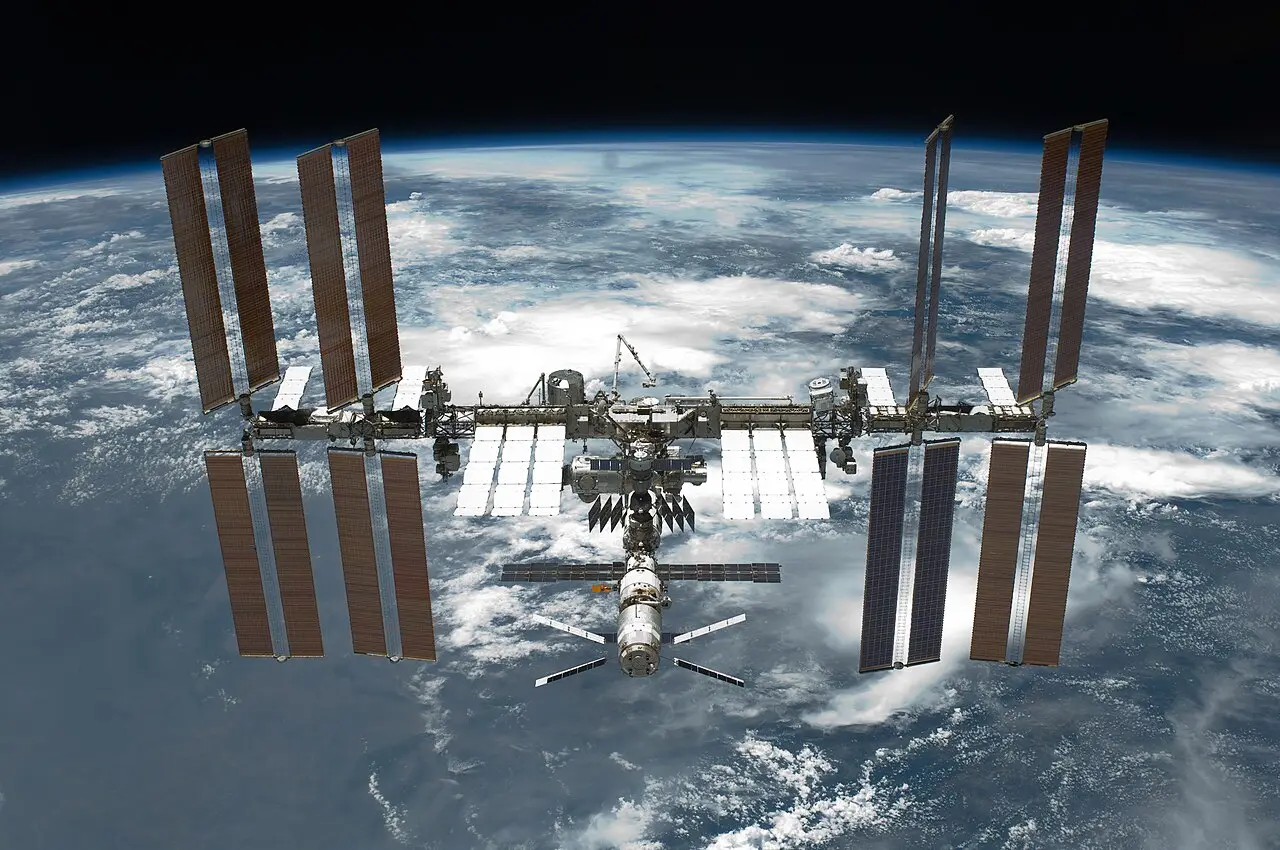
Four astronauts have returned safely to Earth after more than seven months aboard the International Space Station.
The SpaceX Crew-12 capsule splashed down in the Pacific Ocean near Los Angeles at 8.34am local time on Thursday 8 October, 4.34pm in the UK. SpaceX recovery teams reached the capsule shortly afterwards and lifted the crew and spacecraft aboard their ship.
The crew
- Jessica Meir, NASA, on her second spaceflight.
- Jack Hathaway, NASA, on his first spaceflight.
- Sophie Adenot, European Space Agency, on her first spaceflight.
- Andrey Fedyaev, Roscosmos, on his second spaceflight.
The crew launched on 13 February and docked with the station the following day. In 237 days, they circled the Earth more than 3,792 times and travelled more than 100 million miles.
"Humanity's greatest adventure"
NASA's Administrator, Jared Isaacman, said: "Jessica, Jack, Sophie, and Andrey spent 237 days living and working in orbit, traveled more than 100 million miles, advanced important science, and returned safely home because of the extraordinary expertise and competence of thousands across NASA, SpaceX, and our international partners."
"Building the capability, experience, and confidence to do this repeatedly is exactly what will allow us to go farther," he said.
Spacewalk records
Jessica Meir carried out four spacewalks during the mission, taking her career total to seven. That puts her third among NASA's women for career spacewalks, behind Peggy Whitson and Suni Williams.
Sophie Adenot completed three spacewalks, becoming the first French woman to step outside the International Space Station.
The science
The crew spent hundreds of hours on experiments designed to support future missions to the Moon and Mars and to improve life on Earth. They included:
- producing stem cells in space, for possible use in cell-based medical treatments;
- testing technology that makes intravenous fluids on demand, which could be vital on long missions far from Earth;
- studying how bacteria that cause pneumonia may contribute to lasting heart damage;
- research on nutrition, and on how individual physical characteristics affect blood flow in weightlessness.
What happens next
After months in weightlessness, astronauts have to readjust to gravity. Their muscles and bones weaken in orbit, and balance can be affected for days or weeks. The crew will go through medical checks and rehabilitation in Houston, and NASA will hold a news conference with the returning astronauts at the Johnson Space Center on Thursday 15 October.
Europe's role
Sophie Adenot's mission was a milestone for the European Space Agency, of which the UK is a member. ESA astronauts fly to the station through agreements with NASA, and European scientists, including teams in UK universities, design many of the experiments carried out on board.
The station has been continuously occupied since November 2000, and is expected to be retired around the end of the decade, when NASA hopes commercial space stations will take over.
More in Science
All
Latest news
Featured posts
-
Things to do
Top 10 places to visit in Birmingham
-
Food and drink
The 12 most popular food spots in Birmingham
-
Things to do
The best laser tag locations in Birmingham