
"Chunky" Jurassic squid relative named after fossil collector
Two rare fossils from Wyoming reveal the thickest belemnite ever found, a barrel-shaped cousin of modern squid that lived 160 million years ago.
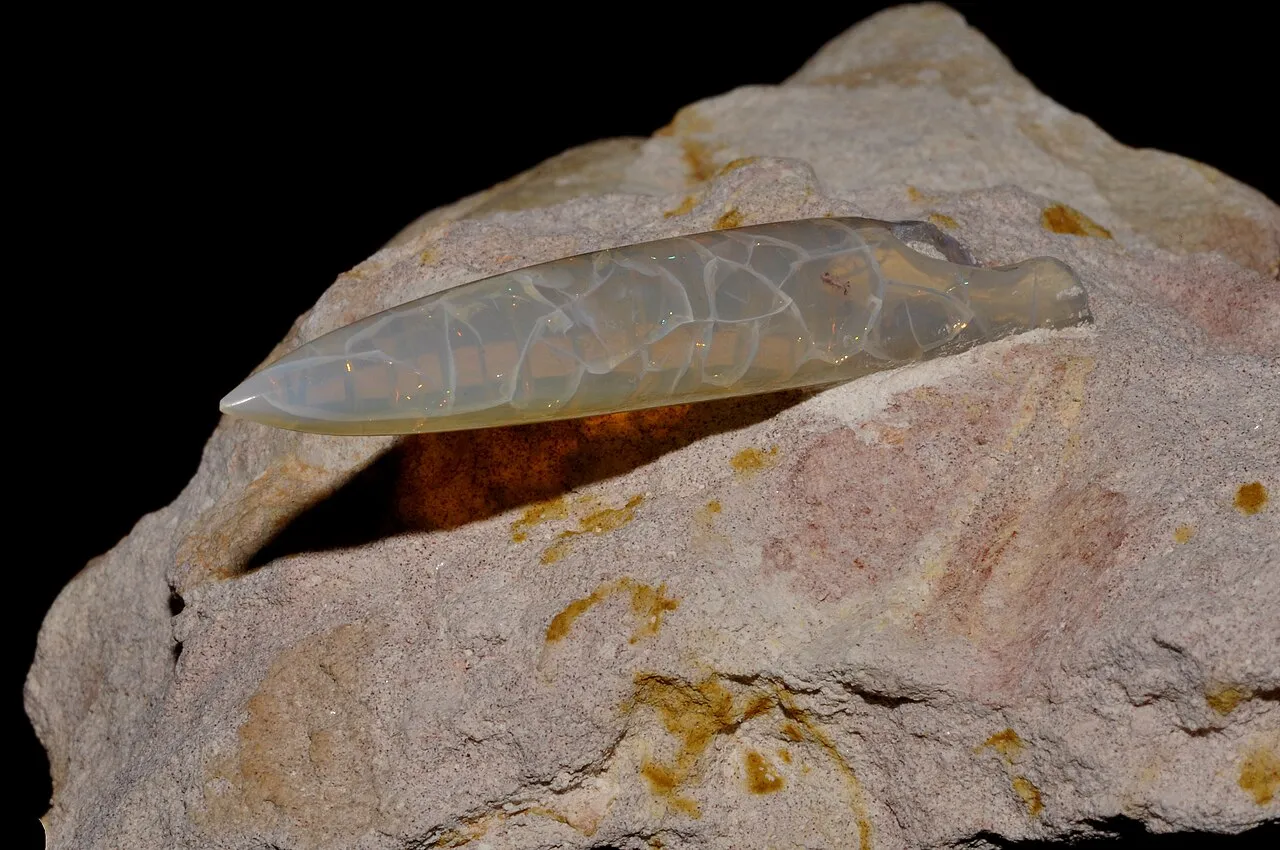
Scientists have described a new species of prehistoric squid relative from Wyoming with such an unusually thick internal skeleton that they have called it the "chunkiest" belemnite ever found.
The animal, named Wyoteuthis linsterorum, lived about 160 million years ago in the Jurassic period, in a shallow sea that once covered much of the western United States. The research, by a team from the United States, the United Kingdom and New Zealand, is published in the journal Papers in Palaeontology.
Squid butts
Belemnites were marine animals related to modern squid and octopuses, and they are among the most common fossils on Earth. Usually all that survives is the bullet-shaped internal skeleton, called a rostrum or guard. In Wyoming they are so common that collectors nickname them "squid butts".
Most Wyoming belemnites are slim, between 5 and 10 centimetres long and just 1 to 2 centimetres across. The new species is strikingly different. Its rostrum is about 10 centimetres long but an extraordinary 6 centimetres wide. Including its arms, the living animal may have been around 60 centimetres long.
The Wyoming palaeontologist Bill Wahl said the fossil "stuck out like a sore thumb" among the thousands of others found in the state. CT scans, which allowed the team to look inside without damaging the fossils, revealed a link to a family of belemnites that scientists thought had died out millions of years earlier.
A hunter of its own kind?
Alexey Ippolitov, a belemnite specialist now at Victoria University of Wellington, said he was "deeply surprised" to find such an unusual animal in a group that has been studied for more than 200 years. He suggested its size may have helped it hunt smaller belemnites living alongside it.
"Modern squid, after all, are hardly picky when it comes to prey," he said. "They readily hunt not only other species of cephalopods, but sometimes even their own kind."
Thirty years in a drawer
The first specimen was found in the late 1990s by Burkhard Pohl, founder of the Wyoming Dinosaur Center, but it sat unstudied in a museum drawer for years. A second was found near Ten Sleep, Wyoming, by the fossil collector Cliff Linster, who donated it in 2019. With two specimens to compare, the team could finally describe a new species.
The name Wyoteuthis means "a squid from Wyoming", and linsterorum honours Mr Linster and his family. He died in June, before the research was published.
The British palaeontologist Dean Lomax, an honorary research fellow at the University of Manchester, first met the Linsters as a teenager when he spent a week digging dinosaur bones on their land in Montana.
"I'm honoured to help name this fossil after Cliff," he said. "It's bittersweet that he didn't get to see it published, but it's wonderful that we can immortalise him and his family name in the history of palaeontology."
Both fossils are now on display at the Wyoming Dinosaur Center in Thermopolis.
More in Science
All


Latest news
Featured posts
-
Things to do
Top 10 places to visit in Birmingham
-
Food and drink
The 12 most popular food spots in Birmingham
-
Things to do
The best laser tag locations in Birmingham