
Birmingham study finds glaciers ending in lakes are losing ice fastest
Glaciers that end in lakes, oceans or ice shelves make up 3 per cent of the world's total but account for more than half of all glacier ice loss.
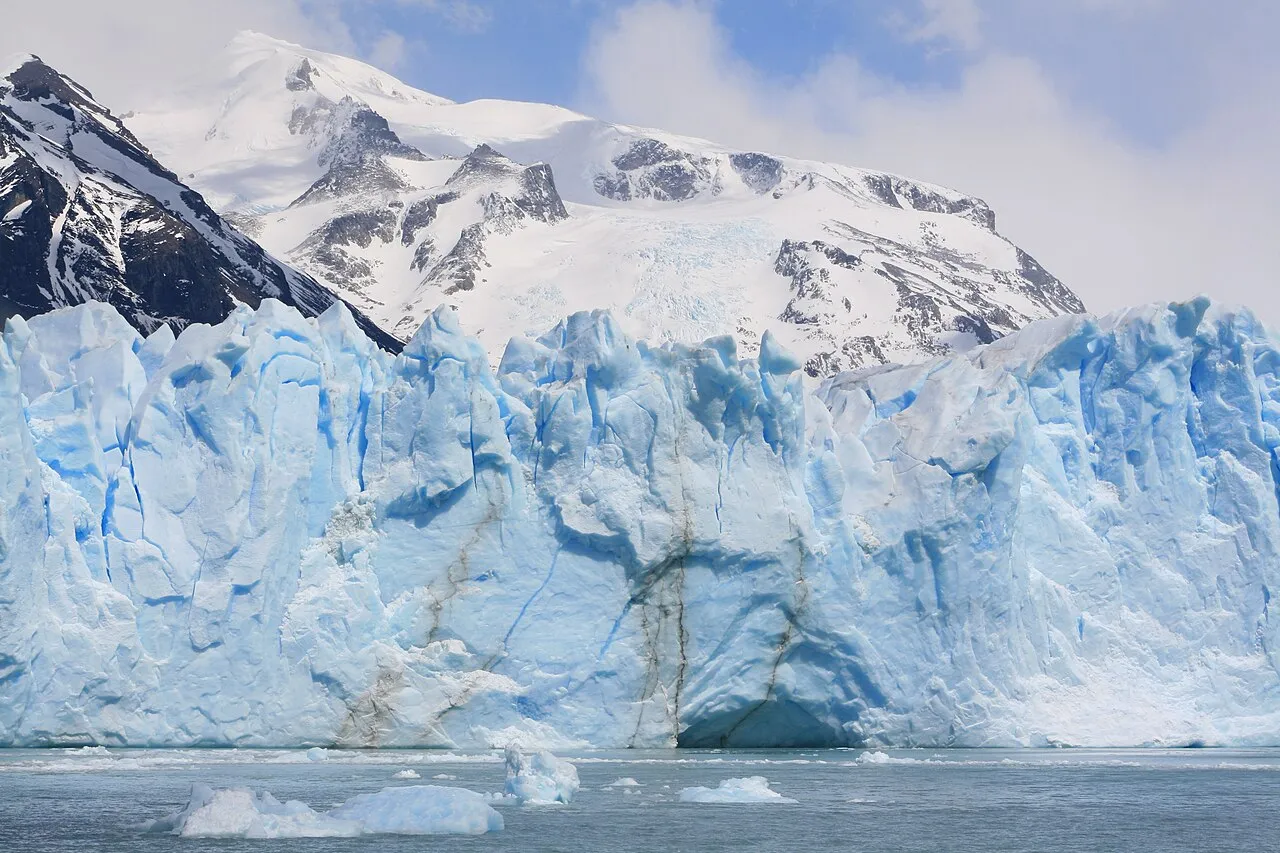
Just 3 per cent of the world's glaciers are responsible for more than half of all glacier ice loss, according to a study led by scientists at the University of Birmingham.
The research, published in the journal Nature Communications, looked at glaciers that end in lakes, in the ocean or in floating ice shelves. Together they make up 3.2 per cent of the world's glaciers, but between 2000 and 2019 they lost 134 billion tonnes of ice a year.
Bigger, and melting faster
The team, from the universities of Birmingham and Leeds, examined 216,502 glaciers around the world, leaving out the Greenland and Antarctic ice sheets. They worked out which glaciers end in lakes, added this to existing records of those that end on land, in the ocean or in ice shelves, and then compared how fast the ice in each type was flowing and how much it was losing.
Glaciers that end in water tend to be much larger than those that end on land, and together they cover more than half of the world's glacier area. But size was not the whole story. After allowing for climate, size and altitude, glaciers ending in lakes lost about 57 per cent more ice, relative to their size, than those ending on land.
The study also found that glaciers ending in lakes flow on average 10 per cent faster than land-ending glaciers, and those ending in the ocean 44 per cent faster. Lake-ending glaciers were found in every major glacier region of the world, and in most regions they were losing ice faster than any other type.
Why lakes matter
Lakes can speed up ice loss in several ways. Large chunks can break off the front of a glacier as icebergs, a process known as calving, and lake water can melt the ice below the waterline.
Dr Joe Mallalieu, who carried out the research at the University of Birmingham and is now at the University of Leeds, said: "Glaciers ending in lakes really stand out: they're losing ice particularly quickly. We don't yet know exactly why. It could be the lakes themselves, the size and shape of the glaciers, or a bit of both. Untangling that is the next big question, especially as glacier lakes are becoming more common in a warming climate."
Glaciers changing type
As the climate warms, a growing number of glaciers are changing type. In parts of the Arctic, glaciers that once ended in the sea are retreating onto land, while around the world the growth of glacier lakes is turning land-ending glaciers into lake-ending ones. The researchers say these shifts could pull in opposite directions, with glaciers retreating onto land likely to slow down while those newly ending in lakes could lose ice faster.
Many of the computer models used to project glacier change do not yet fully account for lake-ending glaciers. The team's new global classification, which is freely available, could help other scientists improve forecasts of sea-level rise, water supplies and natural hazards such as floods from glacier lakes.
Dr Nicholas Barrand, of the University of Birmingham, said the last decade had seen a huge increase in the glacier and climate data available. "As more glaciers shift from one setting to another, understanding those differences will only become more important," he said.
The work was supported by the Leverhulme Trust and a UK, Canadian and Inuit Arctic research programme.
More in Science
All


Latest news
Featured posts
-
Things to do
Top 10 places to visit in Birmingham
-
Food and drink
The 12 most popular food spots in Birmingham
-
Things to do
The best laser tag locations in Birmingham