
First new Metro trams enter service
The Spanish-built trams will replace the original fleet and run through the city centre when the extension opens.
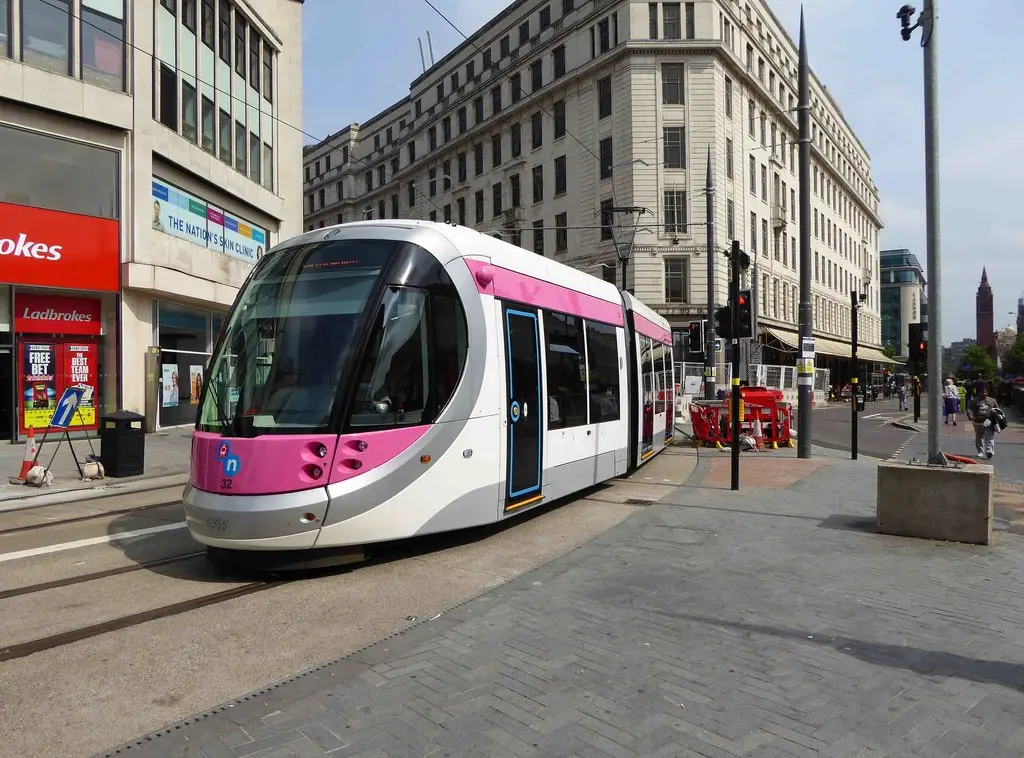
The first of a new generation of trams have entered service on the Midland Metro, the line that runs between Birmingham and Wolverhampton.
The first four of the new trams began carrying passengers on 5 September, and will gradually replace the line's original fleet.
A new fleet
The new trams have been built by the Spanish manufacturer CAF and are its Urbos 3 model, already used in cities in several countries. They are longer than the old trams and can carry more passengers, with more space for wheelchairs and pushchairs.
The old trams, built by the Italian company AnsaldoBreda, have served the line since it opened in 1999, but have become increasingly unreliable. They will all be withdrawn once the full new fleet is in service.
Ready for the city centre
The new trams are needed for the extension of the Metro through Birmingham city centre, which is under construction. Work began in 2012 on the route from Snow Hill along Bull Street and Corporation Street to New Street station, and the city's streets have been dug up for months as pipes and cables are moved and track is laid.
When the extension opens, trams will run on the streets of the city centre for the first time since 1953, when Birmingham's original tram network closed.
The line today
The Metro's single line runs for about 20 kilometres from Snow Hill station in Birmingham to St George's in Wolverhampton, mostly along the route of the old Great Western Railway line between the two cities, which closed in stages between 1972 and 1992. It calls at places including the Jewellery Quarter, The Hawthorns, West Bromwich, Wednesbury and Bilston.
When it opened, it was intended to be the first line of a much bigger network, with routes to Birmingham Airport and Dudley among those proposed. Those plans were never built because the money could not be found, and the transport authority has since focused on extending the existing line in stages.
What passengers can expect
Passengers can expect smoother, quieter journeys and better information on board.
For a while, passengers will see both old and new trams on the line, as the new fleet is gradually brought into service and drivers are trained on them.
Looking ahead
Further extensions are planned once the city centre route is complete, including to Centenary Square and Edgbaston, and eastwards to the planned HS2 station at Curzon Street. Funding for the first phase of the Eastside extension was secured earlier this year.
The new trams are the first visible sign for passengers of a transformation of the network, and of a return of trams to the heart of Birmingham.
More in Transport
All


Latest news
Featured posts
-
Things to do
Top 10 places to visit in Birmingham
-
Food and drink
The 12 most popular food spots in Birmingham
-
Things to do
The best laser tag locations in Birmingham